Tento obsah ešte nie je dostupný vo vašom jazyku – zobrazuje sa verzia: English.
Red fox
Vulpes vulpes
Známy aj ako: fox, dog fox, vixen
The most widespread predator in Hungary; controlling its numbers matters for protecting small game and ground-nesting birds.
Appearance
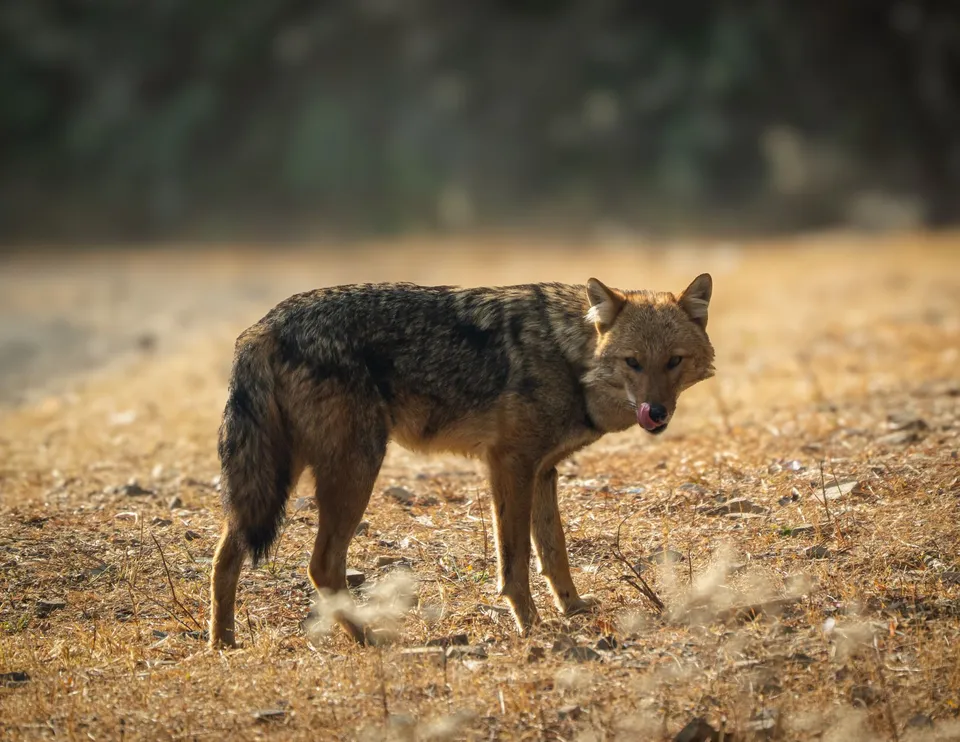
A medium-sized canid with a reddish-brown coat, white throat and underside, and black lower legs. The long bushy tail (brush) often has a white tip. Body length is 60–90 cm, plus a 35–50 cm tail.
Biotop
Found in almost every habitat: forests, farmland, reed beds and increasingly in cities. It digs its own den or takes over badger setts and other burrows.
Spôsob života
It hunts mainly at dusk and at night. An opportunistic omnivore, it eats voles, mice, hares, ground-nesting birds and their eggs, insects, carrion and fruit.
Mating takes place in January–February, when its hoarse barking can be heard at night. Cubs are born in March–April in the den.
It can spread rabies and the fox tapeworm (Echinococcus multilocularis); thanks to oral rabies vaccination, Hungary is rabies-free.
Stopy a znaky
- Track: oval, narrower than a dog's, about 5 cm long; the trail is often in a straight line.
- Droppings: pointed, containing fur, bone and seeds, often left in prominent places (stones, trail junctions).
- Den: soil heap at the entrance, prey remains, strong smell.
Trofej a hodnotenie
The skull is scored as a trophy under the CIC system (sum of length and width), and the winter pelt is also valued. The gold medal threshold for skulls is 24.0 CIC points.
Doba lovu
Informatívny prehľad. Záväzné je platné znenie predpisu a rozhodnutia orgánu štátnej správy poľovníctva a užívateľa revíru.
Odporúčané kalibre
Súvisiace články
Komentáre
Zatiaľ žiadne komentáre. Buď prvý!